

Polonnaruwa is Sri Lanka’s medieval golden age laid out in stone – a UNESCO World Heritage Site and ancient royal capital that flourished between the 10th and 12th centuries, producing a legacy of sculpture, architecture, and engineering that rivals anything created in Asia during the same period. More compact and easier to navigate than Anuradhapura, Polonnaruwa rewards a day of dedicated exploration with an extraordinary density of beautifully preserved monuments, rock sculptures, and reservoir engineering that speaks directly to the sophistication of the Sinhalese civilisation at its peak. This tour pairs an archaeological immersion with a broader sense of the rural Cultural Triangle landscape that surrounds it.
The Gal Vihara is Sri Lanka’s most powerful sculptural achievement – four colossal Buddha figures, including a 14-metre reclining figure and a soaring standing Buddha, carved from a single granite face in the 12th century with extraordinary precision and artistry. Visiting in the early morning stillness before the heat and crowds arrive is one of the genuinely transformative experiences available on the island.
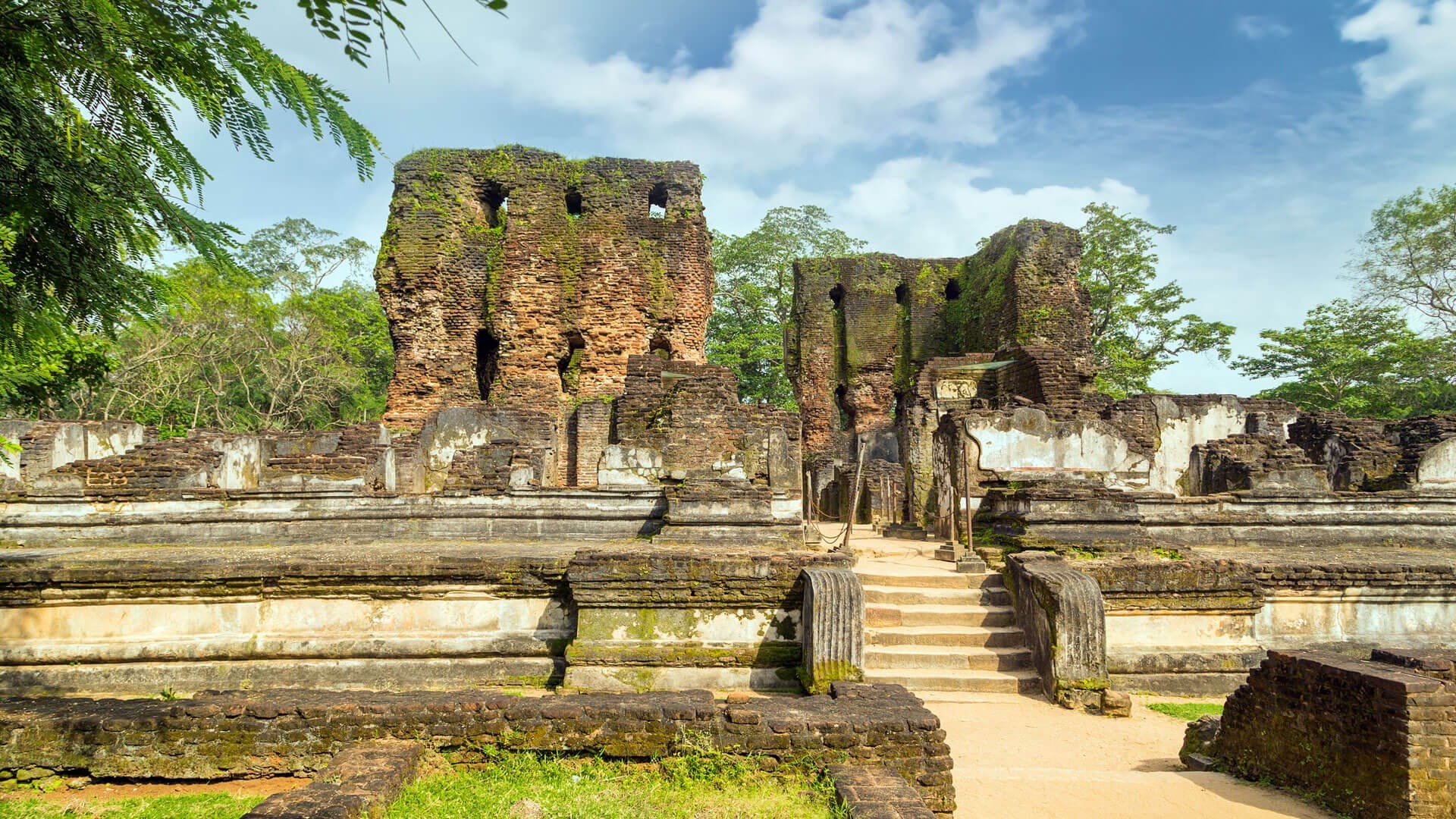
Polonnaruwa’s Royal Palace ruins speak to the scale of medieval Sinhalese ambition – walls that once rose seven storeys, polished throne rooms, and the elaborate Kumara Pokuna pool, all arranged within a royal quarter of impressive sophistication. The surrounding archaeological zone includes the elephant-adorned Audience Hall and the Shiva Devale temples, best explored by bicycle for the freedom to move through the ruins at your own pace.
The Parakrama Samudra is one of the ancient world’s most remarkable engineering feats – a 2,500-hectare artificial reservoir built by hand in the 12th century, with a 14-kilometre earthen embankment that still functions as a working irrigation system today. Sitting at its edge in the late afternoon, with still water reflecting the sky and the ancient royal quarter visible through the trees, is one of Polonnaruwa’s most quietly magnificent moments.
The Polonnaruwa Archaeological Museum offers a well-curated collection of bronzes, stonework, coins, and jewellery recovered from the ancient city, giving physical form to the royal culture that once flourished here. Its scale model of the 12th-century city at its peak is particularly valuable, transforming what might otherwise be isolated ruins into the coherent portrait of a great medieval capital.

